Bedding · Mattress care
Wool-Filled Bedding: Temperature, Cushioning, and Care
A wool mattress pad does not transform a bed so much as adjust its manners. It can soften a firm surface, take the edge off dampness, and make a room’s changing temperatures feel less dramatic. The details, however, matter: shell, fill, attachment, and washing instructions determine whether a pad is a useful everyday layer or a delicate guest that must be handled accordingly.
A material with a quiet talent
Wool is often described as warm, which is true in the way that a good coat is warm: it helps create a comfortable boundary between the body and the surrounding air. In bedding, that quality is only part of the story. Wool fibers can absorb moisture vapor and release it gradually, while their crimped structure holds pockets of air. Together, these properties may help a sleeping surface feel less clammy and more even as the night unfolds.
That does not mean wool controls the temperature of a room, prevents sweating, or guarantees a cool night. Sleep comfort depends on a combination of factors, including the room, pajamas, sheets, mattress, and the sleeper’s own preferences. A wool-filled layer is best understood as one part of that small climate system. For some people, it offers a steadier, drier-feeling bed; for others, the extra insulation or cushioning may not suit their habits.
A wool mattress pad is also not the same thing as a waterproof protector. Wool can manage some moisture, but it should not be treated as a dependable barrier against spills, urine, or other liquid accidents unless the maker specifically says the construction is waterproof. When protecting a mattress from liquids is essential, check that function separately rather than assuming that natural fiber alone provides it.
Cushioning without a new mattress
A pad can add a modest layer of softness between the mattress and the fitted sheet. Wool batting tends to provide gentle loft rather than the deep, enveloping sink of a thick foam topper. The difference is worth considering. A pad may smooth the feel of a firm surface or take some severity out of a mattress, but it is not a reliable fix for a mattress that has lost its support, developed a pronounced dip, or no longer suits the sleeper’s needs.
How much cushioning a wool pad offers depends on its fill weight, batting thickness, quilting or tufting, and how firmly the material is held in place. A lightly filled pad may feel more like a subtle buffer; a thicker one may change the surface more noticeably. Product descriptions sometimes use “pad,” “topper,” and “protector” loosely, so look beyond the name. The dimensions, fill, construction, and stated purpose give a clearer account of what is being added to the bed.
Wool’s spring helps the batting recover from ordinary compression, though no filling remains perfectly unchanged forever. Repeated pressure, laundering, and storage can affect loft. A pad may also feel different after its first wash, particularly if the instructions call for a warm or high-agitation cycle. Gentle handling and realistic expectations are more useful than assuming that natural fill will remain as lofty as it was on the first night.
The construction: shell, fill, and seams
When evaluating wool bedding, begin with the shell. Cotton is a common choice because it is familiar against the skin and allows air and moisture vapor to move through the fabric. The weave, weight, and finish all affect the hand of the pad: a tightly woven shell may feel smooth and substantial, while a lighter fabric can feel more relaxed. If the pad will sit beneath a fitted sheet, its surface texture may matter less than its ability to contain the fill and withstand the intended care routine.
Next, consider what the word “wool” describes. Some pads use wool as the primary filling; others combine wool with additional fibers or use a wool layer within a larger construction. The source, processing, and certifications may also matter to buyers who are looking for particular animal-welfare or environmental standards. Terms such as “organic,” “natural,” and “traceable” do not all mean the same thing. If a claim is important to your decision, look for a named certification and read what it covers instead of relying on broad language alone.
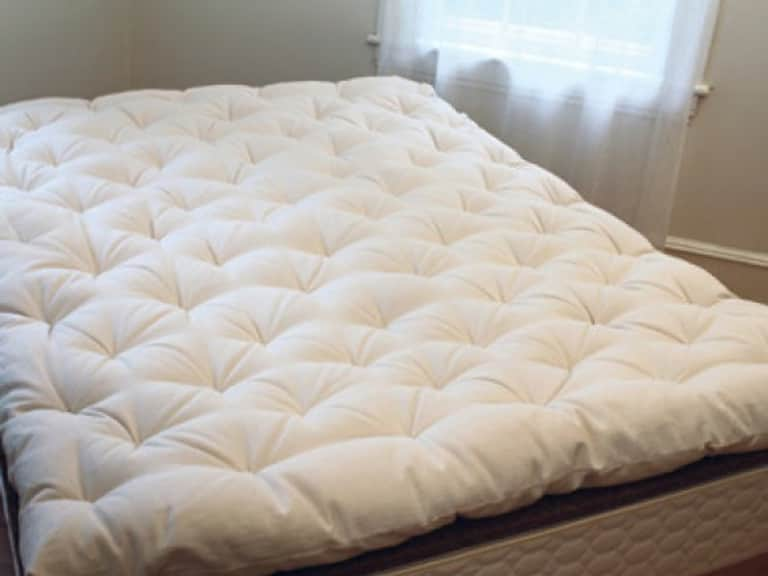
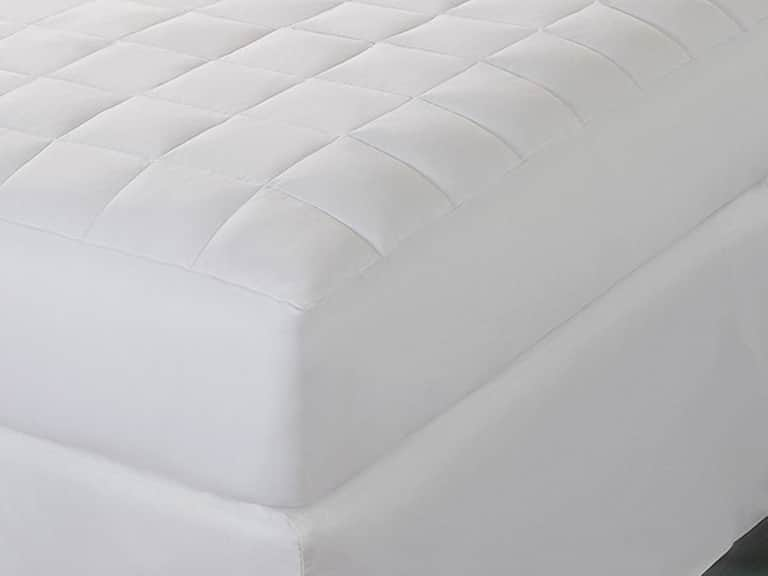
Finally, examine how the fill is held in place. Quilting, box stitching, or hand tufts can limit shifting and bunching. Stitching also creates a pattern of compartments or anchor points that may affect how evenly the surface feels. There is no universally superior construction: the right one is the one that keeps the filling stable, fits the bed, and can be cared for in a way that makes sense for your household.
Some wool pads use corner straps; others have a fitted skirt or elasticated edges. Straps are relatively simple and can suit a range of mattress profiles, but they may move on a slick cover. A fitted design can stay more securely in place, provided its pocket depth matches the mattress. Check the mattress height, including any existing topper, and measure rather than guessing. A pad that is stretched too tightly can pull at its seams; one that is too loose may wrinkle under the sheet.
Choosing for temperature and comfort
For someone who often wakes feeling damp or overheated, wool’s ability to absorb and release moisture may make it worth considering. But “moisture-wicking” is not the same as waterproof, and it does not mean that every sleeper will feel cooler. A thick layer can add insulation; a light fill may have a subtler effect. The whole bed matters, too. Heavy blankets, synthetic sheets, a warm room, and limited airflow can outweigh the contribution of a single pad.
Think about the change you want. If the mattress feels a little too firm, a wool pad may offer a restrained softening. If the goal is a dramatic plush sensation, a thicker topper of another construction may be more appropriate. If the primary concern is liquid protection, seek an explicitly waterproof protector and consider how it may affect breathability and feel. It is possible to use a protective layer with a comfort pad, but stacking layers changes the surface, so check fit and care instructions for both.
People with allergies or sensitive skin should read the materials carefully. Natural origin does not guarantee that a textile will suit every person, and wool’s lanolin content, processing, and finishing can vary. A removable shell, a trial period, or a clear return policy may be useful if those sensitivities are a concern. For persistent or severe symptoms, product selection is not a substitute for advice from a qualified health professional.
Households with children, pets, or frequent spills may place a higher value on easy washing and a liquid barrier than on natural fill. A washable wool pad can be convenient, but the word “washable” has limits: it refers to the care method specified by its maker, not permission to use any cycle, detergent, or dryer setting. Before buying, consider whether the pad can be cleaned at home, whether the washing machine is large enough, and how long it may take to dry.
Washable wool and the care-label distinction
Some wool bedding is designed for machine washing. Other pieces require hand washing, airing, spot cleaning, or professional care. The difference can come down to the wool’s processing, the shell, the stitching, and the way the layers are assembled. A washable wool pad is not simply any wool pad that happens to fit into a washing machine. Follow the label for the exact item, even if you have cared for another wool product successfully.
Before laundering, check for stains and address them according to the manufacturer’s directions. Use the recommended water temperature, cycle, and detergent. Avoid bleach and fabric softener unless the care instructions explicitly permit them; both can be unsuitable for particular fibers or finishes. Do not twist or wring a wet pad, since the weight of saturated fill can stress seams and distort its shape.
Drying deserves as much attention as washing. If the label allows tumble drying, use only the stated heat and settings. If air drying is required, spread the pad so air can circulate, and turn or reposition it as needed. A thick or dense wool filling may take longer to dry than the shell suggests. Do not put a pad back on the mattress while it is damp: trapped moisture can linger between layers and produce an unpleasant odor or encourage conditions that are hard on bedding.
For products that are not machine washable, airing the pad in a dry, well-ventilated place can help refresh it between deeper cleans. This is maintenance, not a way to remove a substantial stain or sanitize a contaminated item. Spot cleaning should also be restrained: excess water can soak into the batting, and vigorous scrubbing may disturb the fibers. When in doubt, consult the maker rather than improvising with a household cleaner.
Even washable designs may have limitations around load size, agitation, temperature, or drying. A small domestic washer can struggle with bulky bedding, especially once it becomes wet. If the pad fills the drum so completely that it cannot move freely, a larger-capacity machine or a care service may be safer. The aim is not to make laundry complicated; it is to keep a preventable mechanical mishap from shortening the life of the item.
Fit, layers, and mattress protection
A well-fitted wool mattress pad should lie smooth beneath the sheet, without pulling hard at the corners or forming ridges across the sleeping surface. Confirm the mattress size and depth, then account for any other layer that will remain beneath the pad. If you use an encasement or waterproof protector, place layers in the order directed by their manufacturers. A protector generally belongs close to the mattress when the goal is to shield it, while a comfort pad is often placed above the protective layer. But construction and care guidance can vary.
Adding layers can change more than the feel. Each one affects how the fitted sheet sits, and a sheet that barely reaches under the mattress may pop free more easily. Check the combined depth of the mattress and bedding before settling on a configuration. If the surface feels lumpy, first check that the pad has not shifted and that the sheet is not pulling it out of position.
Wool may provide some moisture buffering, but it should not be relied on to prevent mold in a mattress. Mold risk is associated with persistent dampness and insufficient drying, among other conditions. Keep the room reasonably ventilated, deal with spills promptly, and let bedding dry fully. A waterproof barrier can help prevent liquid from reaching the mattress, though its breathability and cleaning requirements should be considered as part of the choice.
A practical buying checklist
Rather than beginning with a promise about “perfect sleep,” start with the job you want the pad to do. A short checklist can make product descriptions easier to interpret:
- Purpose: Are you looking for gentle cushioning, moisture management, mattress protection, or some combination?
- Fill: Is the wool the main filling, and is the composition clearly stated?
- Shell: What fabric touches the sheet, and how might its weave and weight feel?
- Construction: Are quilting, tufting, or other features used to keep the fill from shifting?
- Attachment: Does the pad use straps, elastic, or a fitted skirt, and will it suit your mattress depth?
- Care: Is it machine washable, hand washable, spot-clean only, or intended to be professionally cleaned?
- Protection: If you need a liquid barrier, is the pad specifically described as waterproof?
- Verification: Do any certification or sourcing claims name a standard that you can check?
It is also sensible to read the warranty and return terms. A bedding layer is a tactile purchase: a description can explain materials and construction, but it cannot tell you exactly how the pad will feel under your sheets or whether its warmth suits your room. If possible, check whether the maker offers a trial period and what condition the item must be in for return.
A modest layer, with modest claims
Wool-filled bedding earns its place through a combination of qualities rather than one spectacular trick. It may add a soft cushion, hold its shape through ordinary use, and help manage moisture vapor. Those benefits depend on the pad’s design and care, as well as the rest of the bed. It will not correct a failing mattress, guarantee a cool night, or replace a waterproof protector where spills are a concern.
The most useful choice is therefore not necessarily the plushest, most elaborate, or most emphatically described one. It is the pad whose fill and fit answer a real need, whose care instructions suit the household, and whose performance claims are specific enough to evaluate. Wool can make a bed feel a little more forgiving and a little less clammy. Sometimes that small improvement—repeated quietly, night after night—is the point.
Frequently asked questions
Does a wool mattress pad make a bed cooler?
Not necessarily. Wool can absorb moisture vapor and help buffer changes in the sleep environment, but a thick fill may also add insulation. The result depends on the construction, room temperature, sheets, blankets, and individual comfort.
Is every wool mattress pad machine washable?
No. Some are designed for machine washing, while others require hand washing, spot cleaning, airing, or professional care. Follow the label for the specific pad, including instructions for water temperature, agitation, detergent, and drying.
Does wool bedding protect a mattress from spills?
Wool can manage some moisture, but it is not automatically waterproof. If liquid protection is important, choose a product explicitly described as waterproof and confirm how its barrier is constructed and cared for.
How can I keep a wool pad from shifting?
Choose an attachment style that fits the mattress depth, ensure the fitted sheet has enough room for all bedding layers, and check the pad’s position when changing sheets. Quilting or tufting can help keep fill distributed, but correct sizing remains essential.