Nursery care · Bedding
Naturepedic Crib Bedding: Balancing Spill Barriers and Breathability
A crib’s bedding has a modest but consequential job: help keep the mattress clean without making the sleep surface complicated, uncomfortable, or unsafe. Choosing and caring for a protective layer is less a matter of accumulating features than of understanding what each layer does—and following the fit and care instructions that apply to the crib and mattress.
Nursery messes arrive without ceremony. A bottle tips, a diaper leaks, a small amount of milk finds its way beneath the sheet. At other times, the source is less dramatic: ordinary perspiration and the moisture that accompanies daily use. A protective layer can make these incidents easier to manage, sparing a mattress from at least some of the work. But crib bedding is not a place to improvise. The useful question is not simply whether a pad blocks liquid; it is whether the complete sleep setup fits correctly, remains comfortable, and can be cared for as its maker directs.
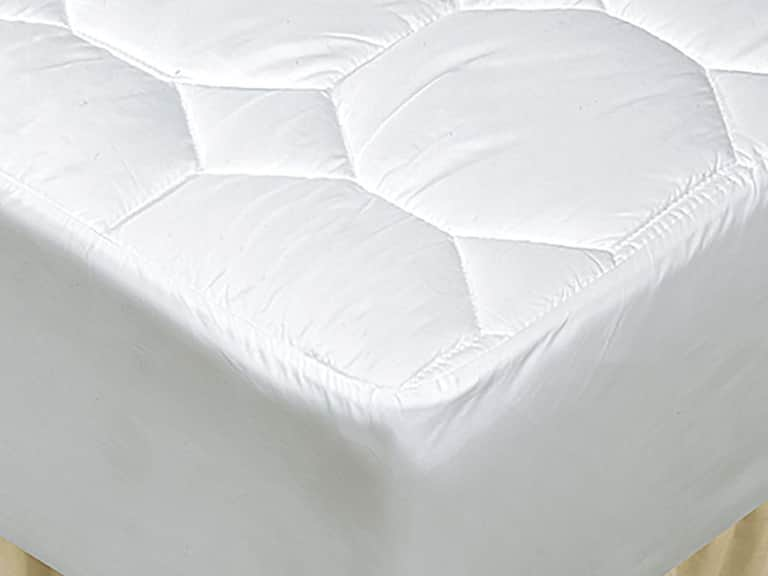
Naturepedic crib bedding offers a useful lens for thinking about these choices. Its crib moisture pads, for example, combine cotton layers with a thin waterproof membrane. The arrangement is intended to create a soft surface while limiting liquid passage into the mattress. Understanding the construction helps caregivers weigh protection against breathability and laundering needs—and helps prevent a practical purchase from becoming an excuse to add unnecessary layers.
This guide is educational, not a substitute for a crib, mattress, or bedding manufacturer’s instructions. Product details and care directions can differ. In an infant sleep space, those specific directions matter more than a general rule of thumb.
What a protective crib layer is meant to do
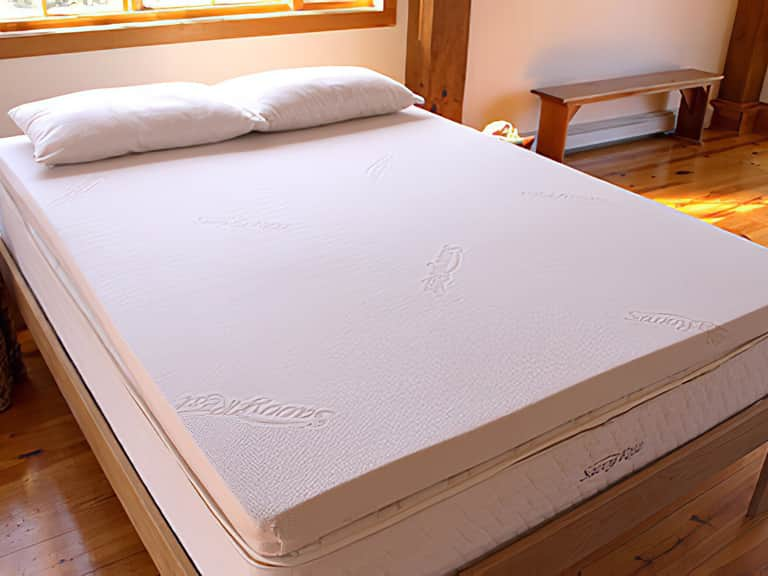
A crib mattress protector or moisture pad sits between the mattress and the fitted sheet. Its purpose is to help keep spills and everyday moisture from reaching the mattress itself. Depending on its materials and construction, it may also make routine cleanup simpler: instead of cleaning the mattress after a small accident, a caregiver may be able to remove and wash the protective layer, following its label.
The terms pad, protector, and encasement are sometimes used loosely, but they can describe different constructions. A thin moisture pad may cover the sleeping surface; a fitted protector may wrap over the mattress with elastic; an encasement may enclose a mattress more fully. The name alone does not establish how an item should be used or whether it is appropriate for a particular crib. Check the item’s dimensions and instructions, and confirm compatibility with the mattress.
Protection also has limits. A waterproof barrier is designed to resist liquid passing through it, but it does not make bedding self-cleaning, eliminate the need to change a wet sheet, or guarantee that the mattress will never be affected by moisture. Promptly removing soiled bedding and following the appropriate cleaning directions remain part of the routine.
Breathability is a property of the whole construction
“Breathable” is an appealing word in bedding, but it can mean different things in everyday product descriptions. Fabric may permit some exchange of air or water vapor, while a waterproof layer is intended to resist liquid water. These functions are not identical. A layered protector can be designed to block spills while allowing some vapor to pass; the degree to which it does so depends on the materials and how they are assembled.
In a Naturepedic waterproof crib moisture pad, the described construction places a thin waterproof membrane between cotton layers. One version uses cotton flannel at the top and cotton muslin beneath, with the inner membrane providing the liquid barrier. The surface fabric and the barrier therefore perform different roles: the cotton contributes the feel of the pad, while the membrane is intended to help keep liquid from moving through to the mattress.
That distinction is more useful than treating “cotton” and “waterproof” as opposing categories. Cotton on its own is absorbent, not a dependable waterproof barrier. A membrane can change how the finished layer handles liquid, though the addition of a barrier may also affect how the material feels and behaves. A protector should be evaluated as a complete item—its fabric, barrier, seams, fit, and care requirements—not by one fiber name or a broad label.
Breathability should not be interpreted as a promise that a baby will never become warm or clammy. Temperature and comfort are affected by the room, sleep clothing, sheet, mattress, and the baby, as well as the protective layer. If a product description makes broad health or comfort claims, read the construction details and instructions rather than assuming that one word resolves every question about the sleep environment.
Flat pads and fitted pads: why fit is part of care
A flat moisture pad is placed over the mattress and beneath the fitted sheet. A fitted pad uses elastic around some or all of its edges to hold it in position. Each construction has its own installation directions; neither should be treated as interchangeable with every other crib accessory. Caregivers should use the design as intended and make sure the sheet and any protective layer fit the specific mattress securely.
Naturepedic’s flat waterproof organic cotton crib mattress pad is described as measuring 28 by 52 inches and intended to be layered under a crib sheet. Its fitted version has elastic around the edge and is likewise described for a standard 28-by-52-inch crib mattress. These measurements are product details, not a universal guarantee of fit: mattress thickness, shape, and the crib’s specifications also matter. Check the exact product dimensions and the mattress maker’s guidance before use.
After making the crib, look closely at the result. The fitted sheet should be secure, and the protective layer should be installed exactly as directed. If a layer bunches, shifts, or prevents the sheet from fitting properly, do not assume that pulling harder or adding another layer is the solution. Recheck compatibility and instructions. A smooth, correctly fitted sleep surface is not an aesthetic nicety; it is a basic part of using nursery bedding as intended.
In particular, avoid stacking pads, toppers, folded blankets, or other unapproved materials in an effort to improve cushioning or absorbency. The sleep space should follow current safe-sleep guidance and the instructions for the crib and mattress. When there is uncertainty about whether an accessory belongs in the crib, consult the manufacturer or an appropriate health professional rather than experimenting.
Choosing materials with the nursery routine in mind
The best material is not necessarily the one with the most persuasive adjective. It is the one whose construction, care demands, and fit suit the household’s actual needs. For a family expecting frequent spills, the presence of a clearly described waterproof barrier may be important. For a household trying to keep laundering manageable, machine-washable construction and understandable care instructions may carry just as much weight.
- Surface fabric: Cotton flannel and cotton jersey can feel soft, while cotton muslin has a different weave and hand. The finished item’s texture depends on its full construction, not simply the word “cotton.”
- Liquid barrier: Check whether a product is explicitly described as waterproof or water resistant. These terms are not necessarily equivalent, and a product description should not replace the maker’s directions for use.
- Fit: Compare the protector’s measurements and design with the mattress. Consider depth as well as length and width, and confirm that the crib’s manufacturer permits the accessory.
- Care: Determine whether the item can be machine washed and dried, and note any limits on temperature, detergent, or drying method. A barrier that is damaged by unsuitable care may not perform as intended.
- Household needs: Think about how often the pad may need washing and whether a spare, compatible protective layer would make routine changes easier. Do not add multiple layers to the crib at once unless the manufacturers’ directions expressly support that setup.
Organic certification can tell a consumer something about the standards applied to materials or production, depending on the certification and the scope of its claim. It does not, by itself, establish that a product is waterproof, a particular temperature, or suitable for every crib. Treat certifications as one piece of information alongside construction, dimensions, care instructions, and safe-use guidance.
A practical routine for crib bedding care
There is no single washing schedule that makes sense for every household or every product. A clean layer may be used for longer when it remains dry and unsoiled; a pad exposed to a spill should be changed promptly. The product label, mattress directions, and any relevant nursery guidance should determine how an item is washed and dried.
- Remove the sheet and inspect the surface. Look for moisture, residue, or a shifted protector. If bedding is wet or soiled, change it rather than leaving it in place.
- Separate the layers according to their instructions. A fitted sheet, pad, and mattress may each have different cleaning requirements. Do not assume they can all be washed or wiped in the same way.
- Use the care label. For a washable pad, follow the stated cycle, temperature, detergent guidance, and drying method. Avoid bleach, high heat, or fabric treatments unless the instructions permit them.
- Allow items to dry fully. Before returning a protector or sheet to use, make sure it is dry and in good condition. If a mattress has become wet, follow the mattress maker’s cleaning and drying advice.
- Check fit during reassembly. Place the pad as directed, secure the fitted sheet, and make sure no component is bunched or loose.
Care is also a matter of restraint. Strong cleaners, improvised waterproofing sprays, and repeated high-temperature drying may be inappropriate for a product’s materials. A membrane can be affected by the wrong washing or drying conditions, and an item that has changed shape or developed damage should be assessed against its manufacturer’s replacement guidance.
What to do after a spill
For a small spill, the first step is usually straightforward: remove the sheet and protective layer, then launder them according to their labels. Check whether any liquid reached the mattress. If it did, consult the mattress manufacturer’s care instructions before using a cleaner, applying heat, or saturating the surface. Different mattress materials tolerate different cleaning methods, and excess liquid can create a larger problem than the original spill.
A waterproof crib pad can reduce the chance that ordinary spills reach the mattress, but no layer should be treated as an excuse to delay changing wet bedding. Prompt attention keeps the routine simple and helps prevent lingering dampness. If the pad’s surface is damaged, the fit has loosened, or its barrier appears compromised, check with the manufacturer about continued use.
Nor should a caregiver infer that a protector prevents every possible household pest or allergen. Product claims vary, and a moisture barrier is not a substitute for a complete approach to cleaning or pest management. Choose an item for the protection it actually describes and avoid extending that claim beyond the evidence supplied by its maker.
A note on sleep-surface safety
Crib bedding decisions sit inside a larger set of safe-sleep practices. A protector should not change the intended firmness or fit of the mattress, and added cushioning should not be used to make the crib feel more comfortable. Follow the crib and mattress manufacturers’ instructions, and refer to current guidance from recognized public-health authorities for infant sleep. If product directions appear to conflict, pause and ask the relevant manufacturer or a qualified health professional for clarification.
This care guide does not diagnose allergies, skin conditions, or breathing concerns. Organic fibers and waterproof construction may be relevant preferences for some households, but they should not be presented as medical treatments. For questions about an infant’s health or a suspected reaction to bedding, seek advice from a clinician.
Common questions about breathable crib bedding
Does a waterproof crib pad have to feel plastic?
Not necessarily. Some products place a thin membrane between fabric layers, so the surface a caregiver touches is textile rather than an exposed barrier. The feel and sound of the finished pad depend on its materials and construction. Product descriptions can offer clues, but the care label and the item itself remain the practical references.
Can a cotton pad be waterproof?
Cotton alone absorbs liquid. A pad made with cotton outer layers can nevertheless be designed to resist liquid passage if it includes a separate waterproof membrane. Read the construction details rather than assuming that the fiber named in a product title describes the entire pad.
Should the pad go above or below the fitted sheet?
Use it in the position specified by its manufacturer. A moisture pad intended to sit beneath a crib sheet should be installed that way, and the fitted sheet must still fit securely over the completed surface. Do not add layers or change the arrangement based on appearance alone.
How often should crib bedding be washed?
Follow the product instructions and change bedding whenever it becomes wet or soiled. A fixed schedule may not account for differences in use, accidents, or material care requirements. Keeping a clean spare sheet can make an unexpected change less disruptive without requiring extra bedding to remain in the crib.
Does “breathable” mean the baby cannot overheat?
No. The term describes a material characteristic, not a guarantee about an infant’s temperature or comfort. Room conditions, sleep clothing, and the complete bedding setup also matter. Follow current safe-sleep guidance and avoid relying on one product claim to assess the whole sleep environment.
A quieter kind of preparation
Good nursery care is often made up of unremarkable decisions: a sheet that fits, a pad used as directed, a wash label read before the first cycle. A protective layer can be useful because it gives moisture a more manageable destination and can spare a mattress some everyday wear. Its value depends on the details—what the barrier is made of, how the pad sits, and whether it can be maintained without guesswork.
When considering Naturepedic crib bedding, or any organic crib bedding with a waterproof component, begin with the actual product specifications. Confirm dimensions and mattress compatibility, distinguish surface fabric from the barrier beneath it, and understand the washing and drying instructions. Then keep the sleep space simple. Protection works best not as one more complication, but as a carefully fitted layer within a routine that respects the crib and mattress makers’ directions.