Mattress care & comfort
Choosing an Organic Latex Topper for Comfort and Care
A topper can make a familiar bed feel newly accommodating—or introduce a different set of compromises. With organic latex, the decision turns on more than a label: firmness, construction, fit, and the unglamorous business of care all shape how the sleep surface performs.
The small change that changes the bed
A mattress is often treated as a settled fact. It is bought, carried upstairs, wrestled into place, and expected to remain the same kind of bed for years. But comfort is not quite so fixed. A mattress can feel too firm in one season of life and perfectly serviceable in another; a new sleeping position, a different pillow, or a gradual change in the mattress itself can make its surface seem less welcoming than it once did. A topper offers a way to adjust that first impression without replacing the entire bed.
Organic latex is one option for making that adjustment. It is valued for its buoyant, responsive feel: rather than sinking slowly into a soft hollow, a sleeper may feel supported near the surface, with cushioning around the shoulders, hips, and other pressure points. The exact sensation depends on the latex, the topper’s thickness and firmness, and the mattress beneath it. A topper is not a magic correction, and it cannot restore a mattress that has lost its structure. But when the underlying bed is sound and simply feels too hard, too flat, or insufficiently forgiving, a thoughtfully chosen layer can make a meaningful difference.
The word organic deserves a little attention. It generally refers to how the natural latex is produced and certified, not to a guarantee that every part of a finished topper is organic or that the product has a particular feel. Covers, adhesives, quilting, and other components may have their own materials and standards. Reading the product documentation is more useful than letting one appealing word do all the work.
What natural latex feels like
Natural latex is made from the milky sap of the rubber tree, processed into a resilient foam. In a topper, that resilience is the defining feature. The material compresses under weight and springs back when the weight is removed, creating a feeling commonly described as buoyant, lively, or gently lifted. It can contour to the body, but it does not necessarily produce the slow, enveloping sink associated with some other foams.
That responsiveness can be welcome for sleepers who want cushioning but dislike feeling caught in the bed. It may also make changing position feel easier. Yet “responsive” is not synonymous with “soft.” A firm latex topper can feel quite solid, while a softer one may provide more give at the surface. Thickness changes the experience, too: a thin layer makes a subtler adjustment, while a thicker one allows more compression and can create a more noticeable shift in comfort.
Latex is sometimes discussed as a single, uniform material, although its feel varies with formulation, density, manufacturing process, and design. Terms such as Dunlop and Talalay refer to different production methods, but neither name alone tells a person whether a particular topper will feel right. Construction details can help explain differences; they cannot replace an honest assessment of how the sleeper wants the bed to feel.
Material language can also become more confident than the evidence warrants. Natural latex may be a useful material choice for someone seeking a resilient foam derived from rubber-tree sap, but it is not automatically the best option for every household or every sensitivity. Latex allergy is a real concern for some people. Anyone with a known or suspected latex allergy should speak with a qualified health professional and check carefully with the manufacturer about the finished product and its materials.
Start with the mattress you already own
Before comparing firmness charts, take stock of the bed beneath the topper. A surface that feels too firm is a different problem from one that sags in the middle. If the mattress has a pronounced dip, a broken support system, or uneven areas that remain noticeable when no one is in bed, a topper may follow the same contours rather than correct them. It can soften a surface; it cannot make a failing mattress structurally sound.
Consider what the mattress is made of and how it responds now. A latex topper placed on a firm, supportive mattress may introduce comfortable cushioning while keeping a relatively buoyant feel. On a soft mattress, the same topper could allow the sleeper to settle farther into the bed than intended. On a mattress with substantial sagging, added material may disguise the problem briefly while making it harder to judge the condition below.
It helps to notice where discomfort occurs. If pressure is concentrated at the shoulder or hip, a little more surface give may be useful. If the bed feels unstable or the lower back seems unsupported, a softer layer may not be the answer. Sleep comfort is personal and affected by many variables, including body shape, position, pillow height, and temperature. A topper is one part of that arrangement, not a stand-alone prescription.
For several nights, note whether the problem is persistent and what seems to bring it on. Does the bed feel hard only in one position? Does discomfort lessen when sleeping elsewhere? Is the pillow forcing the neck into an awkward angle? These observations cannot diagnose a health condition, but they can clarify whether the complaint is really about the mattress surface—or whether another part of the sleep setup deserves attention first.
Firmness: a description, not a universal measurement
Firmness labels are useful in the way a weather forecast is useful: they give a general impression, not a private guarantee. One maker’s “medium” may feel firmer than another’s. The same topper may also feel different depending on the sleeper’s weight, body proportions, sleeping position, and the mattress underneath it. A chart can narrow the field, but no label can account for every body and bed.
Side sleepers often look for enough cushioning at the shoulder and hip to reduce concentrated pressure. A softer or medium-feeling layer may be worth considering, especially over a firm mattress, though excessive softness can allow the body to settle in ways that feel uncomfortable. Back sleepers may prefer a more balanced surface, with some cushioning but a steady sense of support. Stomach sleepers often need to be particularly cautious about adding a thick, soft layer, since too much sink around the midsection may change spinal alignment.
These are starting points, not rules. A person who sleeps on their side may like a firmer surface; someone who sleeps on their back may prefer more give. Body weight also affects compression: a topper that seems firm during a brief test may yield more under sustained pressure, while a lighter sleeper may not engage the material as deeply. If a manufacturer offers a trial period, read the terms closely—especially the required use period, return conditions, and any fees.
When possible, test the topper in the sleep position used most often, for long enough to notice how the surface responds. Sitting on an edge or pressing a hand into the material gives only a partial impression. The relevant question is not whether the topper feels pleasant for a minute, but whether it helps the body remain comfortable through an ordinary night.
Thickness and construction matter
Thickness influences how much the topper can change the bed. A thinner topper typically makes a more restrained adjustment, preserving more of the mattress’s original feel. A thicker one may provide more cushioning, but it also changes the height of the sleep surface and can increase the sensation of sinking. A thick layer is not automatically more comfortable, just as a thin one is not automatically too slight.
Think about the desired scale of change. If the mattress is comfortable in most respects but needs a softer finish, a modest layer may be sufficient. If it feels uncomfortably hard across the whole surface, more thickness could be relevant—provided the mattress is still supportive and the added height will not create other problems. The topper’s construction, firmness, and material density complicate the picture; thickness alone is an incomplete guide.
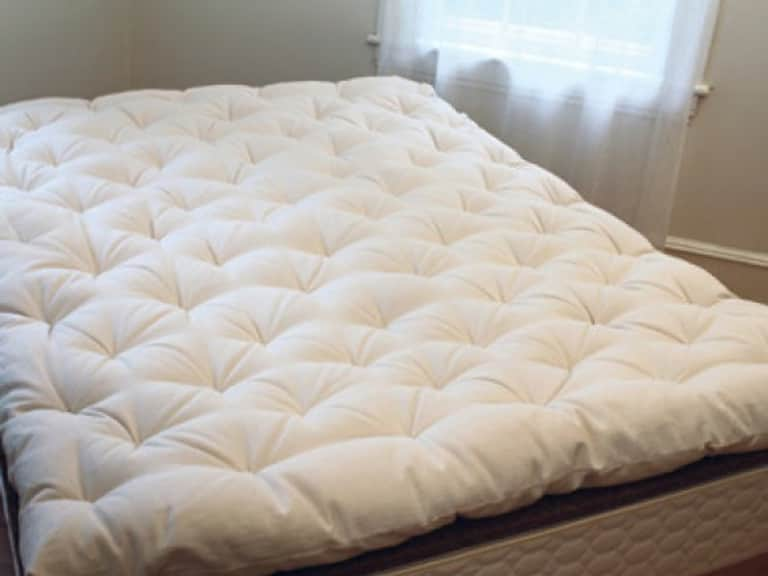
Some toppers are sold as a single latex slab; others have a cover or additional layers. A removable cover can make routine care easier, but its fabric and care instructions matter. A cover may affect the hand of the surface, the way heat moves through the bedding, and how securely the topper stays in place. Ask whether the cover is included, whether it can be removed, and how it should be laundered rather than assuming that “natural” means washable.
Latex can be heavy, particularly in larger sizes and greater thicknesses. That matters when turning the topper, lifting it for airing, or fitting it into a cover. Before settling on a design, consider who will handle routine maintenance and whether the bed frame and fitted sheets can accommodate the added height.
Fit is part of comfort
A topper that shifts, bunches, or extends beyond the mattress can turn a promising purchase into a nightly nuisance. Measure the mattress rather than relying only on its nominal size. Record its length and width, and check its depth, particularly if it already has a pillow top or another added layer. A topper should lie flat and align with the mattress edges.
Also consider how the topper will be held in place. Some rely on the friction between surfaces; others may have a cover or attachment features. The best arrangement depends on the mattress fabric, the topper’s weight, and how much the bed moves during use. A fitted sheet must be deep enough to accommodate the mattress and topper together without pulling taut at the corners. Excess tension can encourage the sheet to come loose or compress the topper unevenly.
On an adjustable bed, confirm that the topper is appropriate for the bed’s movement and construction. A flexible layer may bend with the mattress, but that does not guarantee it will remain properly positioned through repeated adjustments. The bed maker’s guidance and the topper maker’s fit information are worth checking before purchase.
These are modest details, the kind that rarely appear in a dramatic description of a better night’s sleep. They are also the details that determine whether the topper becomes part of the bed or an object that must be straightened every morning.
Organic claims and useful questions
In bedding, “organic” can refer to a defined standard or be used more loosely in marketing. Look for the exact certification, what it covers, and which parts of the product are included. A certification for latex does not necessarily certify the cover, thread, adhesive, or every other component. If the product description is unclear, ask the maker for documentation rather than inferring more than the label says.
It is also reasonable to ask whether the topper contains a blend of natural and synthetic materials, what kind of cover it uses, and whether any flame-retardant treatments or other finishes are present. Requirements and product designs vary, so a detailed materials list is more informative than a broad claim about purity. Certifications can support transparency, but they do not tell you whether the firmness or feel will suit your body.
“Natural,” “organic,” “hypoallergenic,” and “chemical-free” are not interchangeable descriptions. For example, natural origin does not mean a material cannot cause an allergic reaction, and no complex finished product should be assumed literally free of chemicals. A careful reader can appreciate the environmental or sourcing considerations behind a material while still asking practical questions about comfort, durability, and care.
A care routine that respects the material
Care instructions vary by construction. Some latex toppers should not be machine washed or soaked; water and aggressive cleaning can damage materials or make a heavy layer difficult to dry thoroughly. Follow the manufacturer’s directions for the specific topper. If the cover is removable, check its own label as well. The cover and the latex core may require entirely different treatment.
For ordinary freshness, airing can be a simple, low-intervention measure. If practical, lift or remove the topper periodically and allow the bedding to breathe in a dry, well-ventilated space, away from direct heat and prolonged harsh sunlight. Avoid folding or bending the latex sharply unless the maker says that the construction can tolerate it. The aim is to release trapped warmth and moisture, not to stage an elaborate cleaning ritual.
A mattress protector can help keep perspiration, spills, and everyday soil from reaching the topper and mattress. Choose one that fits the full bed arrangement and does not make the surface feel uncomfortably hot or stiff. A protector is useful only if it remains in place and is laundered according to its own care instructions. Using one is a practical way to reduce the need for direct cleaning, which is especially valuable when the topper itself cannot be washed.
If a spill occurs, act gently. Blot rather than rub, and use only cleaning methods approved by the manufacturer. Keep the topper out of use until it is fully dry. Moisture trapped in a thick sleep surface can create lingering odors and an environment in which materials are harder to keep fresh. Do not apply a household cleaner, solvent, or deodorizing product simply because it is nearby; some formulas can discolor or degrade the cover or foam.
Regularly inspect the topper for changes in shape, tears, persistent odor, or uneven compression. Rotation may be appropriate for some designs, but it is not universal; verify whether the maker recommends it. A small maintenance habit is most useful when it follows the product’s construction rather than a generic schedule invented for every bed.
Latex topper or mattress pad?
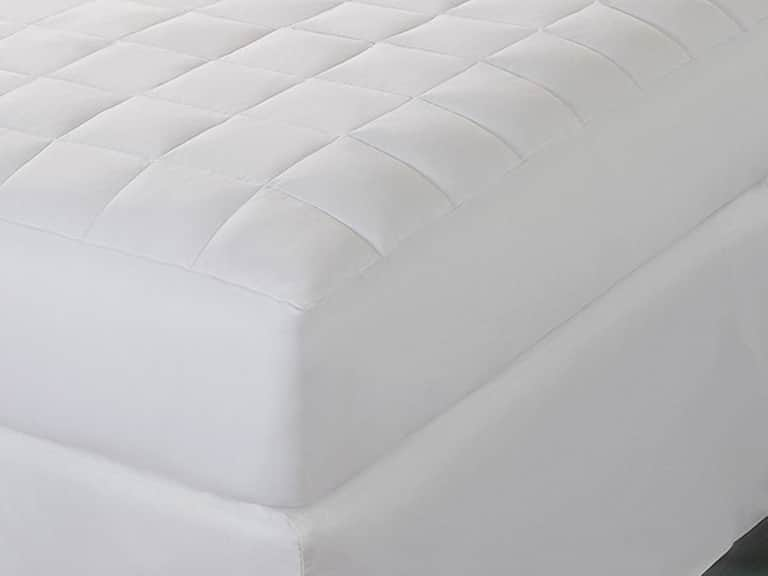
The terms can overlap in casual conversation, but a mattress pad is often designed to add a relatively modest layer of cushioning, sometimes with a quilted fill. A latex topper usually provides a more substantial foam layer intended to alter the feel of the mattress more clearly. Neither category guarantees a particular level of comfort or protection; construction does the explaining.
If the goal is to guard against spills and routine wear, a mattress protector may be the more direct tool. If the goal is to add loft or softness, a cushioned pad may be enough. A latex topper is most relevant when the desired change concerns the feel of the mattress itself—its pressure relief, buoyancy, or overall firmness. Sometimes these functions overlap, and a layered bed may include both a topper and a protector, but each should have a clear purpose.
It is helpful to resist the temptation to solve every bedding problem with another layer. More material means more height, more care, and more variables affecting temperature and support. Begin with the specific discomfort or practical need, then choose the least complicated solution that addresses it.
A practical decision checklist
Before choosing an organic latex topper, work through a few questions. The answers need not be technical; they should be specific enough to distinguish one sleep surface from another.
- Is the mattress structurally sound, or is it sagging and in need of replacement?
- What needs to change: surface softness, cushioning at pressure points, or the general feel of the bed?
- What firmness and thickness are likely to suit the way you sleep, while recognizing that labels vary between makers?
- Do the topper’s dimensions, cover, and fastening approach work with the mattress and bed frame?
- Will the fitted sheets still fit once the topper is in place?
- What exactly does the organic claim cover, and are certifications or materials documented clearly?
- Does anyone using the bed have a latex allergy or sensitivity that needs professional guidance?
- Can the topper be aired and handled comfortably, and are its care instructions practical for the household?
- What are the trial, exchange, and return terms if the sleep feel is not right?
The comfort of choosing carefully
A good topper is not necessarily the softest, thickest, or most persuasively described. It is the one that makes the existing bed better in a particular, understood way. Organic latex may appeal to sleepers who want responsive cushioning, a resilient surface, and clearly documented materials. Its success, however, depends on the relationship between the topper and the mattress beneath it, as well as the body that sleeps there.
Take measurements. Read the care label before buying, not after the first spill. Treat firmness as a personal experience rather than a fixed number. Make sure the organic description is precise, and be realistic about what an added layer can repair. The most useful change may be subtle: a little less pressure at the shoulder, a more forgiving surface, or a bed that feels familiar again without being quite so unforgiving.
In the end, choosing a topper is a form of attentive housekeeping. It asks a person to notice how the bed behaves, what it needs, and which claims deserve a closer look. The reward is not a transformed life, but something more ordinary and perhaps more valuable: a sleep surface that fits the night a little better.
Frequently asked questions
Does an organic latex topper make a mattress feel softer?
It can, depending on its firmness, thickness, and the mattress below it. A softer topper may add more surface cushioning, while a firmer one may feel more supportive. If the mattress is sagging, a topper is unlikely to correct the underlying problem.
How do I choose a firmness level?
Start with the mattress’s current feel and the kind of change you want. Sleep position and body weight affect how deeply a topper compresses, while firmness labels are not standardized across all makers. Where available, use product guidance and trial terms as part of the decision.
Can I wash a latex topper?
Do not assume that you can. Care depends on the specific design; many latex cores should not be machine washed or soaked. Follow the maker’s instructions, and launder a removable cover only as its care label allows.
Will a mattress protector affect the feel of the topper?
It may. The fabric and construction of a protector can change the surface’s hand, breathability, or warmth. Choose a protector that fits the combined height of the mattress and topper, and follow its care instructions.
Does “organic” mean a topper is suitable for everyone?
No. Organic describes aspects of sourcing or production when supported by the relevant standards; it does not guarantee a particular comfort level or rule out sensitivities. People with a known or suspected latex allergy should seek appropriate professional advice and check product materials carefully.